The Pacific Railway Act of 1862
The bloody American Civil War heavily dominates the historical narrative of the 1860s, completely overshadowing a piece of quiet legislation that dramatically rewired the entire continent. For decades prior to the war, Northern and Southern politicians bitterly argued over the proposed route for a transcontinental railroad. Southerners desperately wanted a southern route to expand the economic influence of slavery into new territories, while Northerners relentlessly pushed for a central route. The violent secession of the Southern states inadvertently solved the persistent political deadlock.
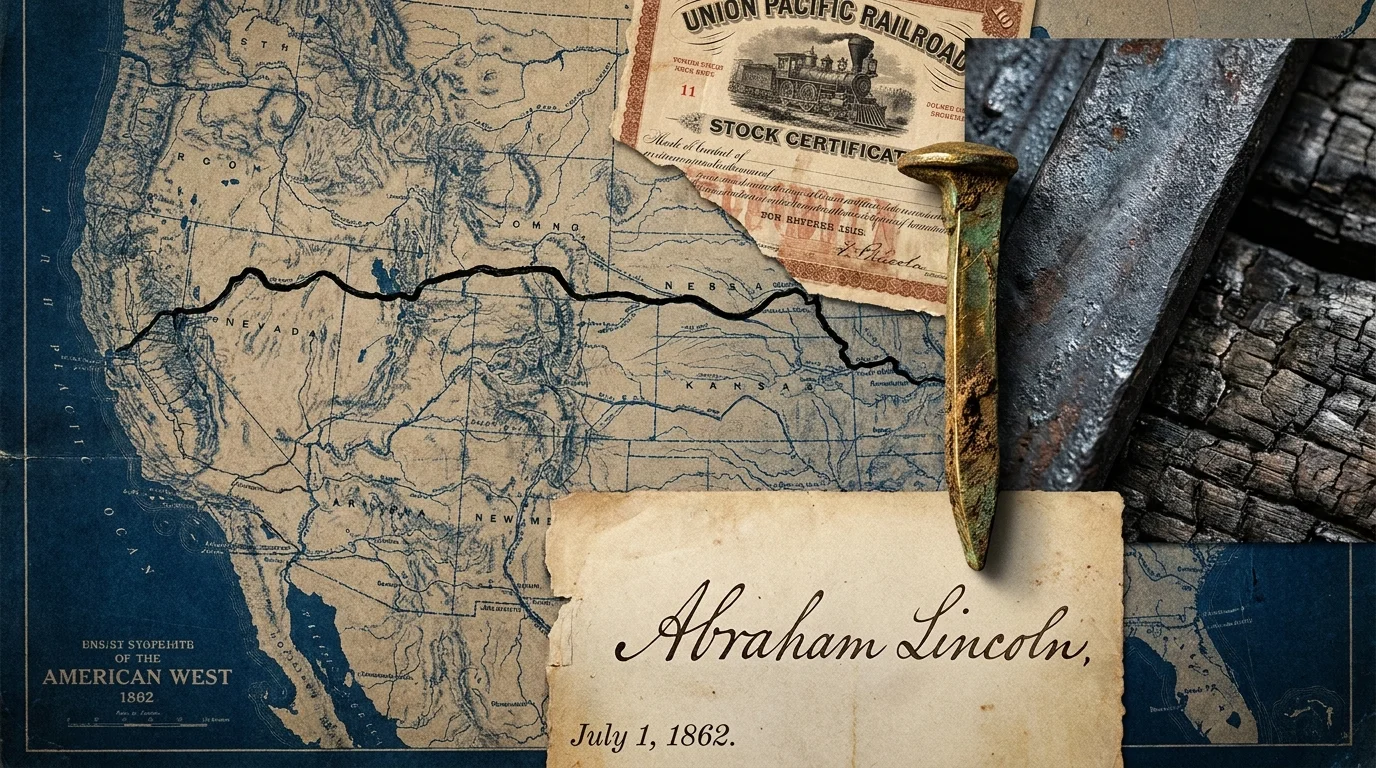
With Southern Democrats entirely absent from Congress, Abraham Lincoln and the Republican majority swiftly passed the Pacific Railway Act of 1862. This monumental law provided massive federal land grants and lucrative government bonds to private corporations—specifically the Union Pacific and Central Pacific railroad companies. The federal government essentially handed over millions of acres of public land to heavily incentivize rapid, privately managed construction.
The consequences were absolute and irreversible for the country. The completed railroad drastically reduced cross-country travel time from several months to mere days, supercharging aggressive westward expansion. However, this relentless progress required the violent military displacement of numerous Native American tribes and the intentional slaughter of the buffalo herds that sustained them. Furthermore, the act birthed the Gilded Age era of massive corporate monopolies, as railroad barons accumulated unimaginable wealth and corrupt political power. Whenever you observe the deep intertwining of corporate enterprise and federal subsidies in modern American infrastructure, you are looking at the exact operational model pioneered by the Pacific Railway Act.