7. The Gong Farmer: Excavating the Cesspits of the Middle Ages
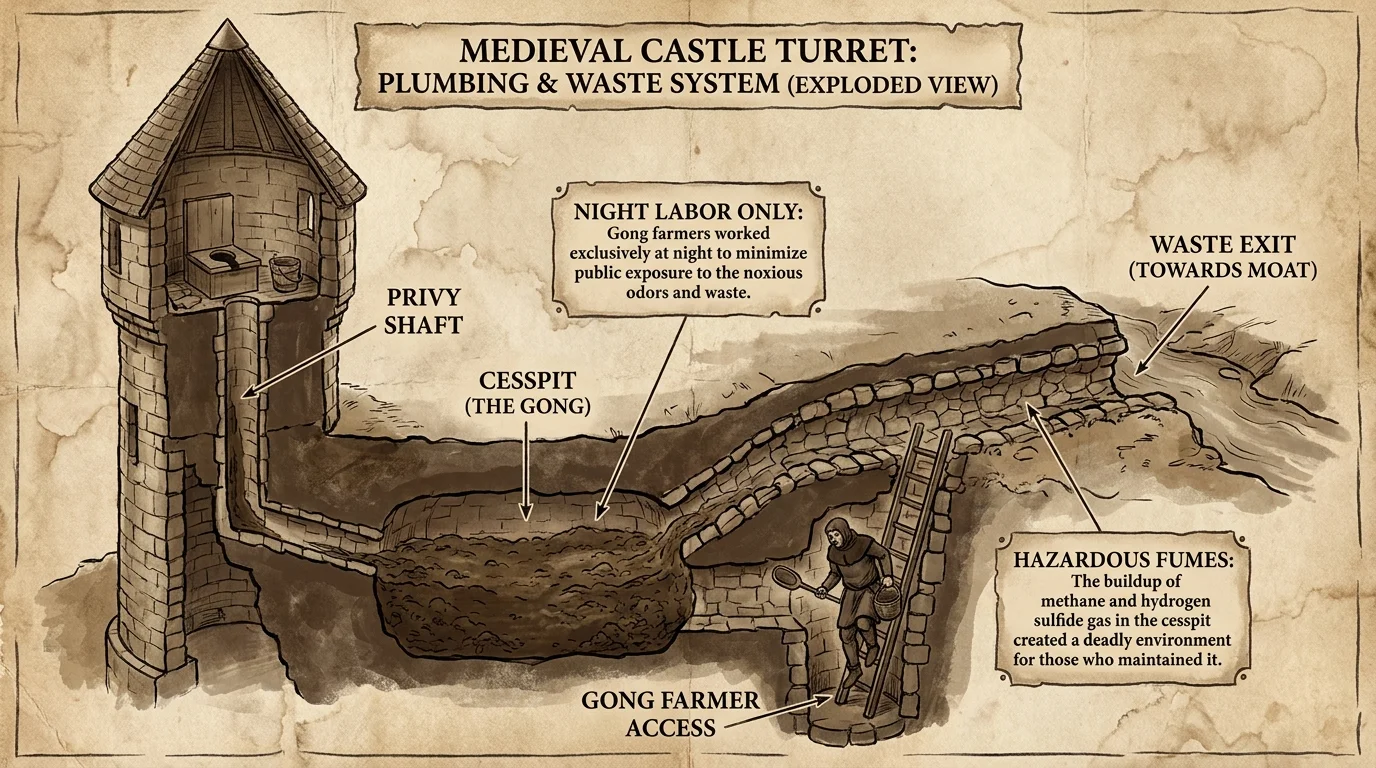
Long before modern subterranean sewer systems whisked waste away, heavily populated cities faced a massive sanitation crisis. In Tudor and Medieval England, human waste dropped directly into deep, brick-lined cesspits located under or adjacent to homes. When these pits filled to the brim, homeowners faced the terrifying prospect of overflow. To prevent catastrophic disease and unspeakable odors from consuming the city, local governments sanctioned the highly regulated, incredibly hazardous profession of the gong farmer.
The term “gong” derived from the Old English word “gang,” meaning “to go.” Gong farmers, also known as night soil men, operated under strict curfews. To spare the delicate sensibilities of the general public, the law required them to work exclusively between the hours of 9:00 PM and 5:00 AM. A crew would arrive at a residence, pry open the cesspit floorboards, and lower a man into the dark, suffocating chamber. The worker shoveled the accumulated, fermenting waste into heavy wooden buckets, which his partners hauled up and loaded into a waiting horse-drawn cart.
This historical career easily ranks among the most dangerous of its era. Gong farmers faced constant exposure to fatal diseases like dysentery and cholera. Furthermore, the decomposition of waste trapped lethal pockets of hydrogen sulfide and methane gas in the pits. A sudden release of this gas could instantly asphyxiate a worker. History records the grim tale of Richard the Raker, a fourteenth-century gong farmer who tragically drowned in his own product when the rotten floorboards of a London cesspit collapsed beneath him. Despite the horrors, gong farmers commanded exceptionally high wages. They also earned extra income by selling the collected night soil to rural farmers, who eagerly used the nitrogen-rich waste as agricultural fertilizer.